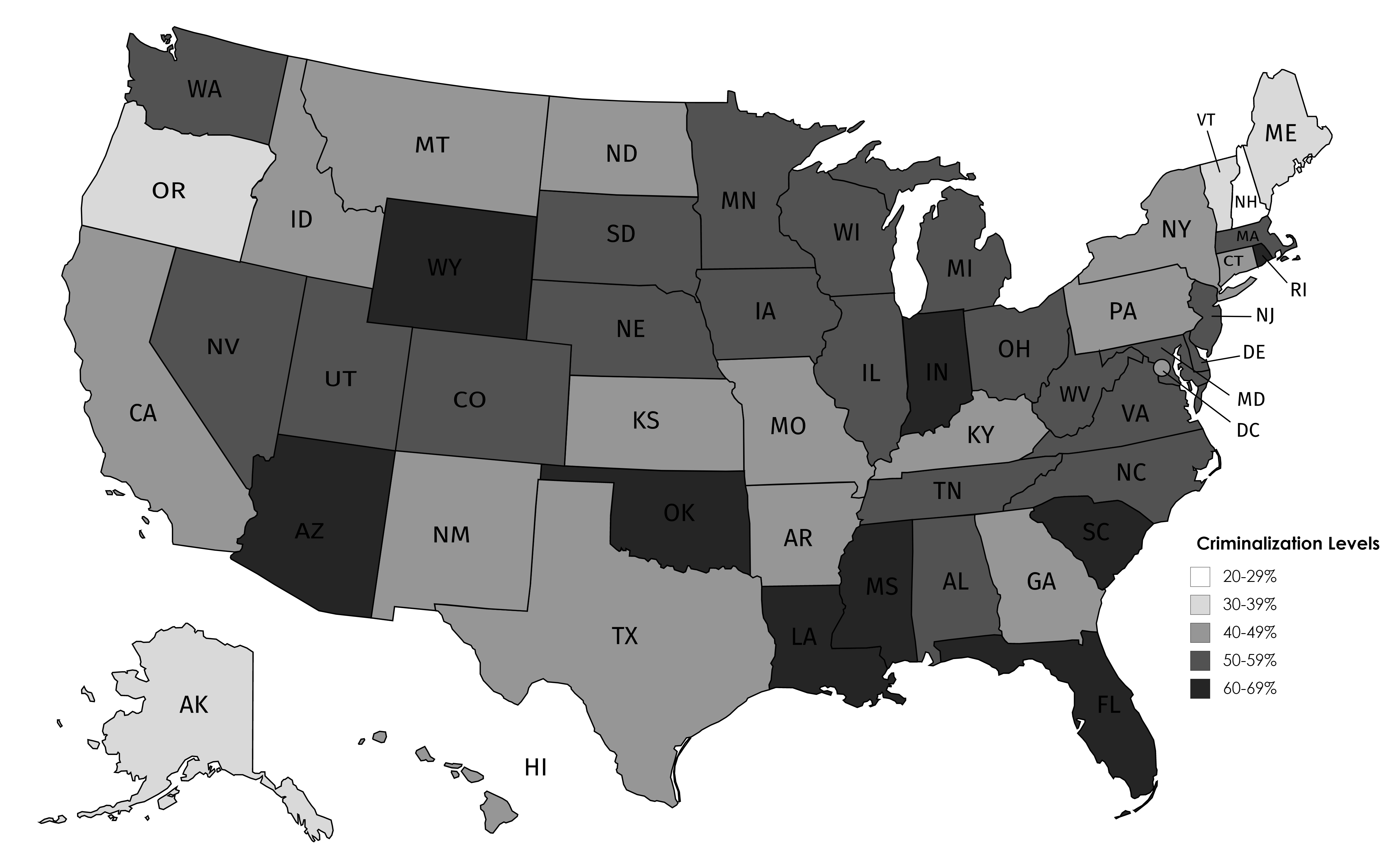
The map and spreadsheet below show a jurisdiction's criminalization level. A jurisdiction with a higher level of criminalization will punish more harshly, criminalize more conduct, and offer less defenses than a jurisdiction with a lower level of criminalization. This page shows the specific ways in which each jurisdiction punishes, criminalizes, and offers defenses to conduct.
The rankings are produced from the data within Paul H. Robinson's Mapping American Criminal Law: Variations across the 50 States. When a criminal law issue can be understood in terms of criminalization, I assign percentages to each jurisdiction. For instance, jurisdictions take one of four approaches to criminal offense codification. Jurisdictions limit the basis for criminal liability to the greatest degree when they require criminal offenses be fully codified. These jurisdictions earned a 0%. Next are jurisdictions that allow for uncodified elements, earning a 33%. Then, jurisdictions that allow for uncodified offenses but limit their punishment, earning a 66%. Finally, jurisdictions that allow for uncodified offenses, earning a 100%.
Keep in mind that this ranking is not meant to be taken too seriously. A serious ranking would need more complete data on each jurisdiction's criminal law and the data would need to be analyzed with more sophistication than I have done. Further, "criminalization" is not meant to carry a negative connotation. Just as jurisdictions may overcriminalize an issue, they may also undercriminalize.